
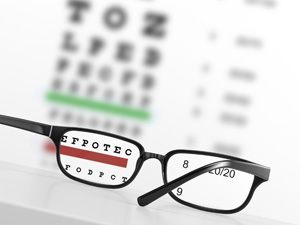
Seeing the Benefits of Vision Plans
Most major medical plans exclude coverage for vision care, including exams, glasses and contact lenses. Do you need a vision insurance plan?
The Vision Council of America (VCA) estimates 11 million Americans have uncorrected vision problems, ranging from refractive errors (near- or far-sightedness) to sight-threatening diseases such as glaucoma or age-related macular degeneration. Nearly 90 percent of those who use a computer at least three hours a day suffer vision problems associated with computer-related eye strain. Individuals who work as engineers, construction workers, stockbrokers, software developers, accountants and administrative assistants are among those most at risk for developing vision problems.
You can find two types of vision coverage: vision insurance plans and discount vision plans. Vision insurance: Your health insurer might offer vision insurance as an add-on to your medical insurance policy; you can also buy standalone policies. Some insurers even offer combined vision and dental plans for individuals and families.
As the name implies, an insurance company underwrites vision insurance plans. When you buy vision insurance, you will receive a policy that outlines your benefits. In exchange for payment of annual or monthly premiums, your policy will probably cover the following basic services:
- Eyeglass frames
- Eyeglass lenses
- Contact lenses
- LASIK and PRK vision correction at discounted rates
As with other health insurance policies, you will have a family and individual annual deductible and a co-payment each time you access a service. Vision insurance policies are only available through a licensed insurance agent. As with other types of insurance, your state insurance department regulates these policies and provides consumer protection services.
Discount vision plan: A discount vision plan offers discounts on eye care services at participating providers after you pay an annual membership fee. Plans advertise discounts of 15 to 40 percent. Typical plans provide discounts on vision exams, eyeglass frames, eyeglass lenses, contact lenses and LASIK and PRK vision correction.
To obtain discounts, you must use a participating eye care professional. You will pay the cost of services at the time of your visit, less any applicable discounts.
To determine whether a discount vision plan is worth the money, make sure your eye care professional participates. Unlike an insurance plan, benefits are not guaranteed under a discount program and plans are not regulated, as insurance is. However, if you and your family members wear glasses and change frames or prescriptions frequently, you might find the discounts worth the cost of membership.
For more information on vision care coverage, please contact us.
Health Insurance 2015: Time’s Running Out!
The Advantages and Pitfalls of Single-Premium Life Insurance
Seeing the Benefits of Vision Plans
The information presented and conclusions within are based upon our best judgment and analysis. It is not guaranteed information and does not necessarily reflect all available data. Web addresses are current at time of publication but subject to change. SmartsPro Marketing and The Insurance 411 do not engage in the solicitation, sale or management of securities or investments, nor does it make any recommendations on securities or investments. This material may not be quoted or reproduced in any form without publisher’s permission. All rights reserved. ©2014 The Insurance 411. www.theinsurance411.com Tel. 877-762-7877.